
Criminal Court Cases in Jefferson Davis Parish
The 31st Judicial District Court has original jurisdiction over civil and criminal matters in Jefferson Davis Parish. It is the parish forum for felonies and district prosecutions. One elected district judge serves the court, so the criminal docket is not split among several district divisions. The district attorney files the formal bill of information or pursues an indictment. Those filed charges may differ from the allegations recorded at booking.
The Jefferson Davis Parish Clerk is the legal custodian of district filings, minutes, judgments, and certified copies. Jennings City Court separately handles city-level criminal charges, misdemeanors, traffic matters, and DWI tickets. A citation, docket heading, or charging paper is a better venue clue than the arresting agency alone. Court records should be requested from the office that keeps that docket.
Jefferson Davis Court Venues
Choosing the right office prevents a fruitless search. The district court and parish clerk are at 300 North State Street in Jennings. The court can be reached at 337-824-3506, while the clerk uses 337-824-1160 and 337-824-8340. Jennings City Court is at 154 North Main Street and answers at 337-821-5500. It keeps its own city criminal, traffic, and DWI records.
| Office | Record role | Best identifier |
|---|---|---|
| 31st JDC Clerk | District cases, minutes, judgments, certified copies | Docket number and filing year |
| Jennings City Court | City misdemeanors, traffic, and DWI matters | Citation or city case number |
| District Attorney | Charging and prosecution record | Defendant and approximate date |
Jefferson Davis Parish Case Record Searches
Public minute entries or summaries for district criminal cases filed since January 1, 2020 feed Louisiana's remote-access program under R.S. 13:5992. Start with the Jefferson Davis Parish Clerk portal and its eClerksLA connection. Remote results may offer only minutes. Images can require a local subscription or payment, and the official sources do not publish the current price. The clerk counter remains the fallback for old cases, missing images, and certified records.
- Identify district or city venue from the citation, charging paper, or docket heading.
- Use the docket number when available; otherwise search the party name and approximate year.
- Open the criminal minutes and read each count, date, status, plea, and ruling separately.
- Compare the filed statute with the booking charge, but treat the filed court count as the case record.
- Ask the correct clerk for the signed judgment or a certified disposition when proof is needed.
| Field Label | Type | Required | Notes |
|---|---|---|---|
| Party name | Text | Alternative | Use full name and variants |
| Docket number | Text | Alternative | Most precise district identifier |
| Filing year | Date/year | No | Narrows common names |
| Case type | Select | No | Choose criminal where offered |
| Document image | Link/status | No | May be subscription or fee gated |
Post-2020 Jefferson Davis Minutes
Louisiana law makes public criminal minute entries or summaries for district matters filed from 2020 forward available electronically unless the record is later sealed or expunged. A minute entry is the clerk's short account of what happened in court. It can show arraignment, plea, motions, hearing settings, bond action, capias, verdict, dismissal, or sentence.
A minute is not always the signed order. When exact wording matters, request the judgment or disposition from the Jefferson Davis Parish Clerk. The clerk can also explain whether an image is available online or only at the counter. The research found no published plain-copy or certified-copy price, so ask for an estimate before ordering.
What a Criminal Case File Contains
A Jefferson Davis Parish criminal case file links the formal charge to each later court event. It commonly identifies the State of Louisiana, defendant, docket, court, filing date, counsel, count, statute, and status. Minutes trace hearings and rulings. The judgment states the outcome, while sentencing papers describe incarceration, probation, fines, costs, restitution, and whether terms run together or one after another.
| Case Number & Court | Identifies the docket and correct Jefferson Davis Parish venue. |
|---|---|
| Charging Document | Lists the formal count, statute, and later amendments. |
| Docket Entries | Chronological filings, minutes, motions, and court action. |
| Hearing Dates | Arraignment, motion, trial, and sentencing settings. |
| Disposition & Judgment | Conviction, dismissal, acquittal, or nolle prosequi by count. |
| Sentence & Conditions | Custody, probation, fines, costs, restitution, and term structure. |
Reading Jefferson Davis Dispositions
Disposition means the result of a charge. A conviction is a judgment of guilt after a plea or verdict. An acquittal is a not-guilty judgment. A dismissal ends a count by court or prosecutor. Nolle prosequi means the prosecutor formally chose not to continue that charge at that time. These terms are not interchangeable.
- Arraignment
- The hearing where formal charges are read and a plea is entered.
- Capias
- A court order directing that a person be taken into custody, often after failure to appear.
- Minute entry
- The clerk's summary of an event in court.
- Disposition
- The outcome of each filed count.
Read each count on its own. One count may be amended while another is dismissed. A case status without a signed judgment can be incomplete.
Criminal Case Stages in Jefferson Davis Parish
The arrest and booking records come first, but the court file begins with the prosecutor's formal charge. At arraignment, the accused enters a plea. Pretrial work can include discovery, motions, continuances, and bond rulings. A plea or trial then leads to the disposition. Sentencing follows a conviction, though plea and sentence may occur together.
Case flow: Charges Filed › Arraignment › Pretrial › Plea or Trial › Disposition › Sentencing
No Phone Scans at Jefferson Davis Court
The 31st JDC court rules state that cell phones are not allowed in the courthouse. Louisiana Code of Civil Procedure article 251 also bars privately owned scanning or copying equipment inside a clerk's office unless a court orders otherwise. A visitor should not plan to photograph a docket from a screen or paper file.
Bring the docket number on paper and ask the clerk for the needed copy. Call first about access, cost, and accepted payment. Interpreter links in English, Spanish, and Vietnamese appear on the court site, while other accommodation details require confirmation through the Judicial Administrator.
The manifest's official 31st JDC source shows the court's public-facing presence.
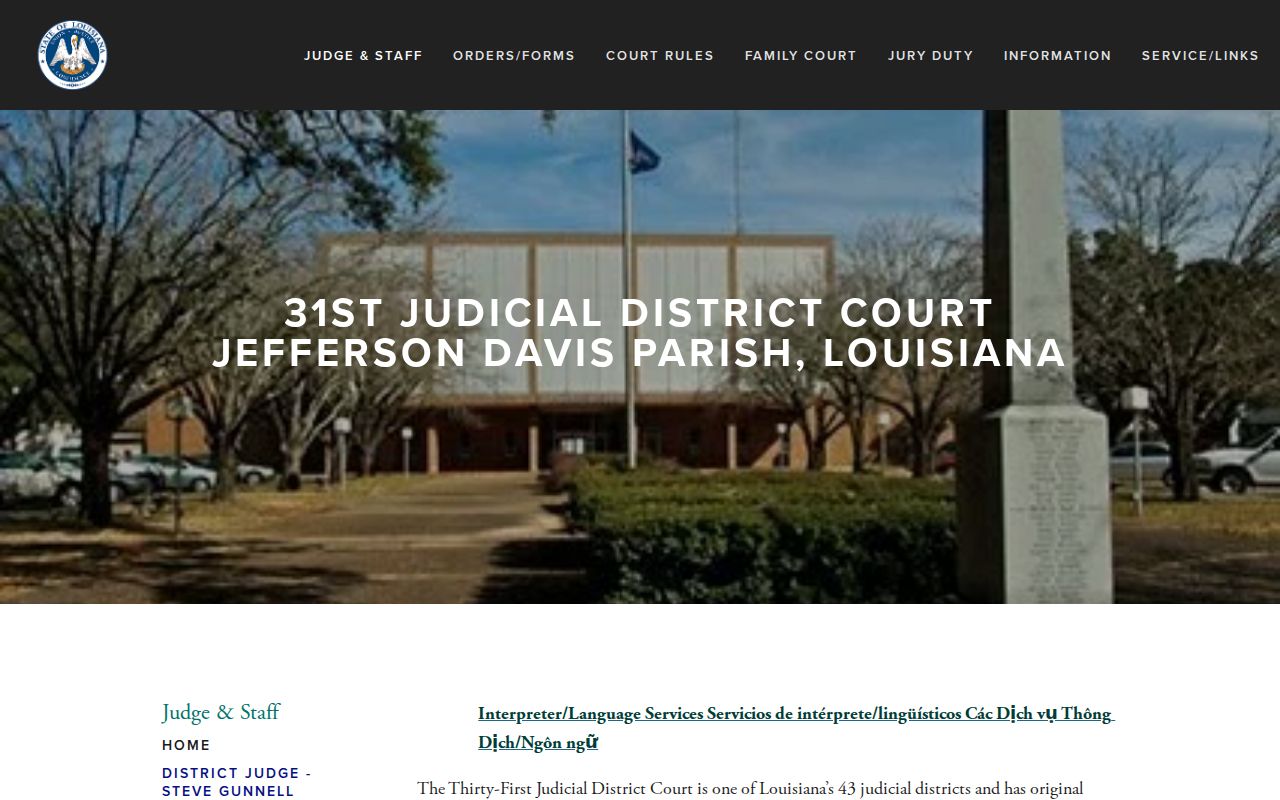
That official court channel is the best place to verify local rules before a courthouse visit.
Jefferson Davis Clerk Remote Access
The Jefferson Davis Parish Clerk website is the local gateway for district records and remote access. Its public material does not publish a complete field list, image subscription price, or current copy fees. A remote result should therefore be treated as an index to the official file, not a promise that every document is viewable without charge.
The manifest image from the clerk's official portal helps identify the correct local source.

For older matters, missing images, or sealed-status questions, call the clerk with the docket, caption, year, and exact document sought.
State and Federal Court Boundaries
Jefferson Davis Parish district cases are not federal cases. A prosecution in the United States District Court uses a federal docket and may be searched through PACER. PACER does not replace the parish clerk. Likewise, Louisiana remote access does not supply a federal file.
The manifest's official PACER source marks that separate layer.
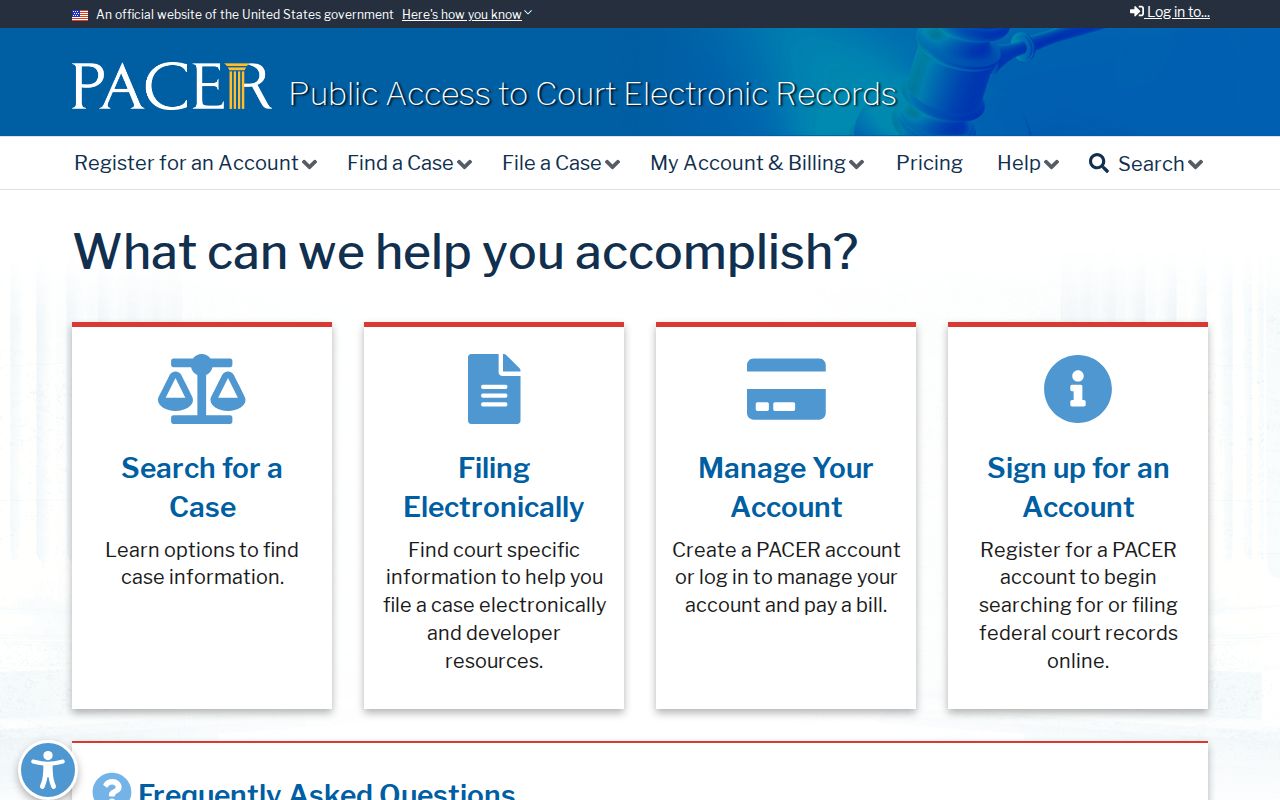
Use the court name on the charging paper before choosing a portal.
The local rules source also documents how pleadings move through the 31st JDC.
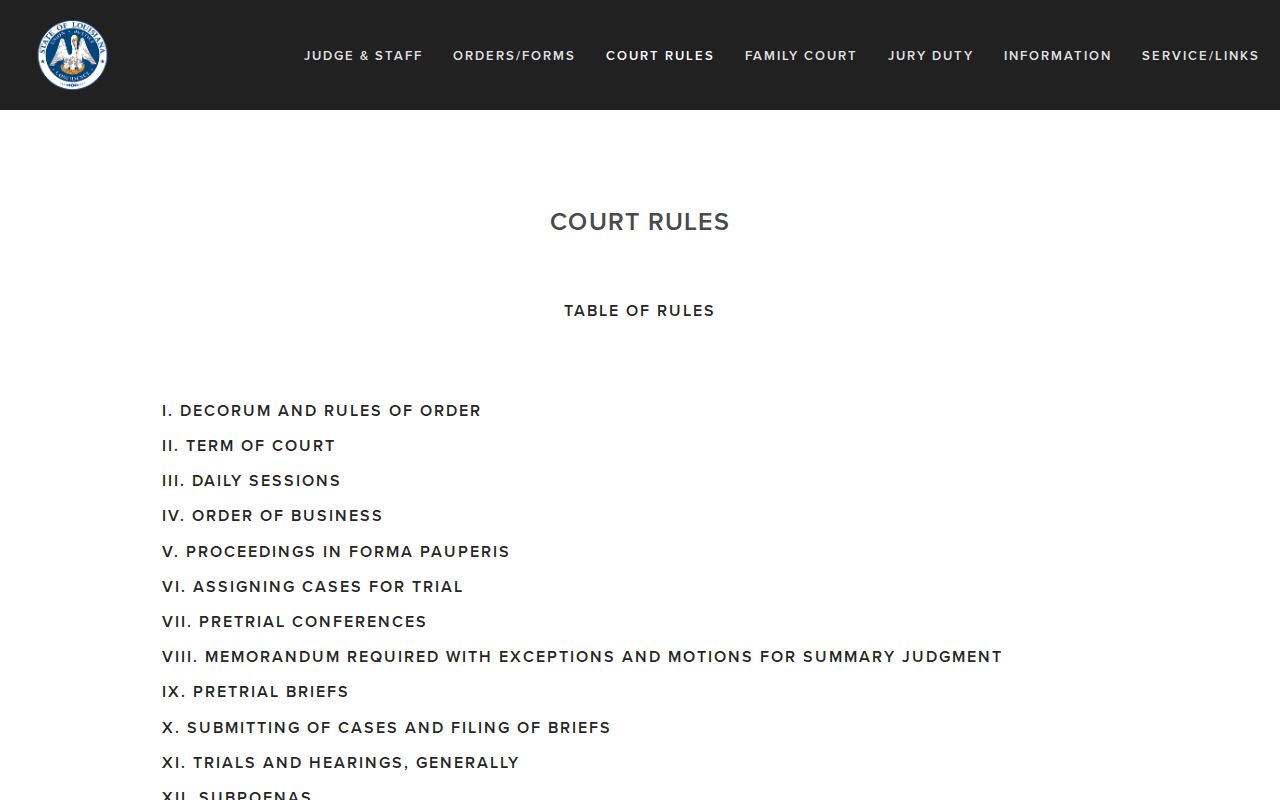
Those rules require filings to go to the clerk first and explain the path for attached orders or judgments.
Access Rules for Case Records
Louisiana Public Records Law and court-custodian rules support inspection and copies of public court material, subject to exceptions. Juvenile matters, protected victim information, Social Security numbers, financial account data, and some addresses may be withheld or redacted. An expunged record is removed from public access but is not destroyed. A missing online result alone does not prove sealing.
Ask the Jefferson Davis Parish Clerk about a case that does not appear. Older files may not be in the statewide view, images may be restricted to local access, and a new filing can take time to post. Request segregable public parts if a file contains protected material. For broader parish criminal-history context, use the Jefferson Davis Parish criminal history overview.